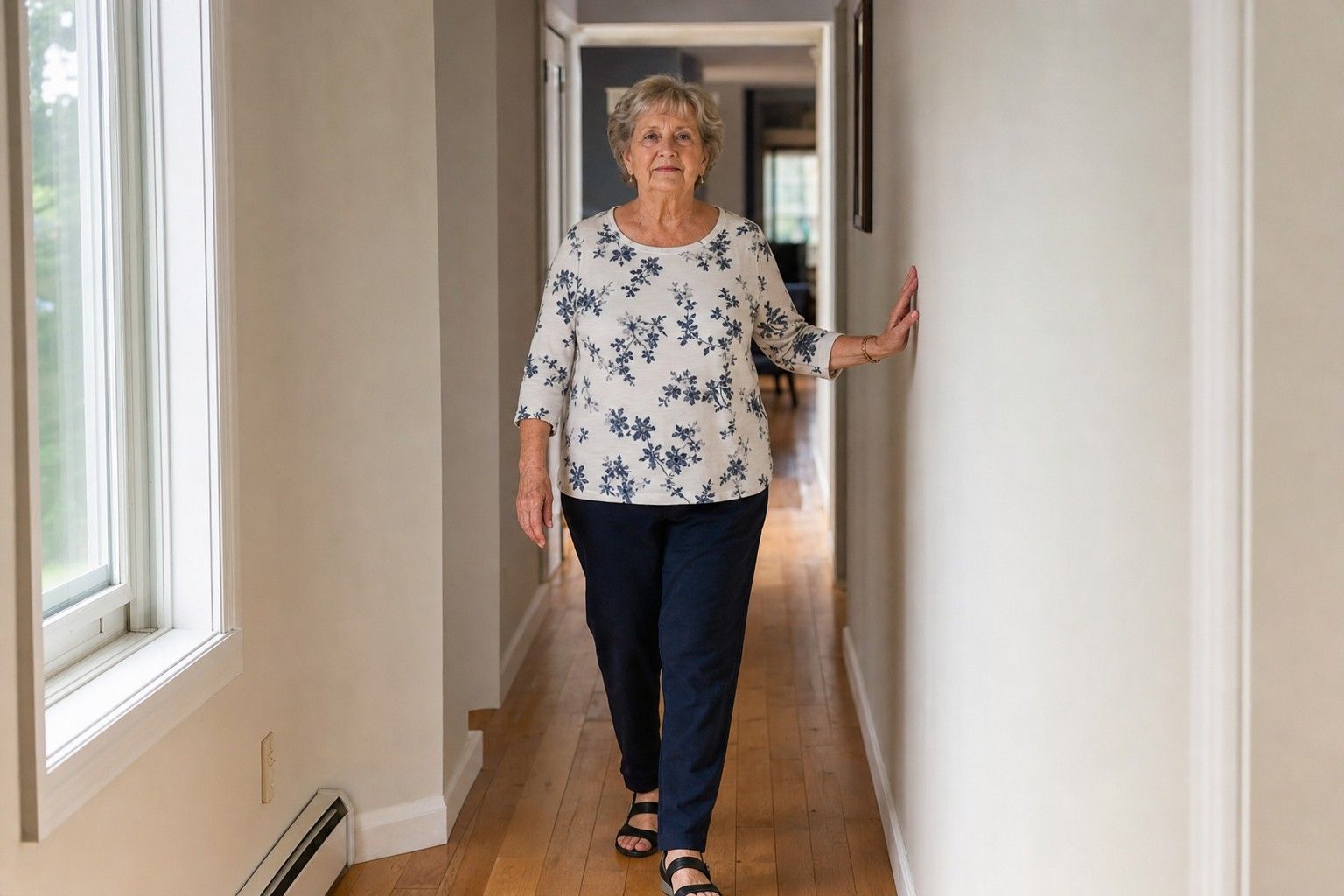
A fall is not simply part of getting older. It can feel that way after one happens, but the truth is more hopeful than that.
Most falls happen at home, and most of them are preventable.
Around one in three people over 65 has a fall each year, according to Age UK. That number sounds frightening, yet it cuts the other way too: falls have causes, and you can remove most of those causes in a single afternoon. You do not need to wait for a scare to start.
Here is where to look, in the order that matters most.
Start where falls actually happen
You do not have to fall-proof the whole house at once. A few rooms account for most trips and slips, so begin there.
- The bathroom, where water, smooth surfaces and standing up all combine
- The stairs, especially the top and bottom steps
- The bedroom, on the path you walk half-asleep at night
- Any doorway with a raised threshold or a trailing cable
Walk slowly through each of these and notice what your feet have to deal with. The hazards you stopped seeing years ago are the ones most likely to catch you.
Clear the floor first
This is the cheapest fix and often the most effective, so do it before you buy anything.
Loose rugs are the classic culprit. Either take them up or fix them down with non-slip backing. Do the same for any mat that slides underfoot.
Then clear your walking paths. Move cables, baskets, magazine piles and anything else that has crept into a route you use every day.
A clear floor beats any gadget you can buy. Nothing you bring home works as well as simply having nothing to trip over.
Light the path you walk at night
Most night-time falls happen on the way to the bathroom, in the dark, before the eyes have adjusted.
Plug-in motion night-lights fix this for a few pounds. Put one in the bedroom, one in the hall and one in the bathroom, so the whole route lights up before you take a step. Keep a lamp or a torch within reach of the bed as well.
A lit path is the easiest fall you will ever prevent.
If a light switch sits too far from the door, an electrician can move it cheaply, and it is worth doing.
Make the bathroom something to hold onto
The bathroom earns its own attention, because so much can go wrong in such a small space.
A handful of changes carry most of the benefit:
- A non-slip mat inside the bath or shower, and another on the floor
- A grab bar by the bath, shower and toilet, fixed into the wall rather than stuck on
- A shower stool, if standing for long tires you out
- A raised toilet seat, if getting up is a strain
If your bath or shower has nothing solid to grip, that is the first thing to put right. You can compare bathroom grab bars on Amazon and have a sturdy one fitted in an afternoon. A towel rail is not a grab bar; it will pull off the wall at the worst moment.
Keep your legs under you
The home is only half the picture. The other half is you, and this is the half you can actively strengthen.
Stronger legs and steadier balance mean a stumble stays a stumble instead of becoming a fall. The NHS points to strength and balance work as one of the most effective ways to lower fall risk, and you can build both at home with no equipment at all.
Start gentle. A few simple chair exercises are a safe place to begin, and from there you can work on steadier balance after 60 a little at a time. Done most days, this is the one change that keeps paying off for years, not weeks.
When it is worth talking to your doctor
Some falls are about more than the house. It is worth booking a check-up if any of these sound familiar:
- You have already had a fall, or nearly fallen, in the past year
- You feel dizzy or unsteady when you stand up
- You take several medicines, or new ones that leave you drowsy
- Your eyesight has changed, or your glasses are overdue for a check
A doctor can check your blood pressure, review your medicines, and refer you for a proper strength and balance programme if you would benefit from one.
This is general information, not medical advice. If you are worried about falling, or you feel unsteady today, speak to your GP or pharmacist. They would far rather hear from you early than after a fall.
Falls are common, but they are not your fault and they are not inevitable. Clear the floor, light the way, hold onto something solid, and keep moving. Each small change quietly tips the odds back in your favour.
Leave a Reply