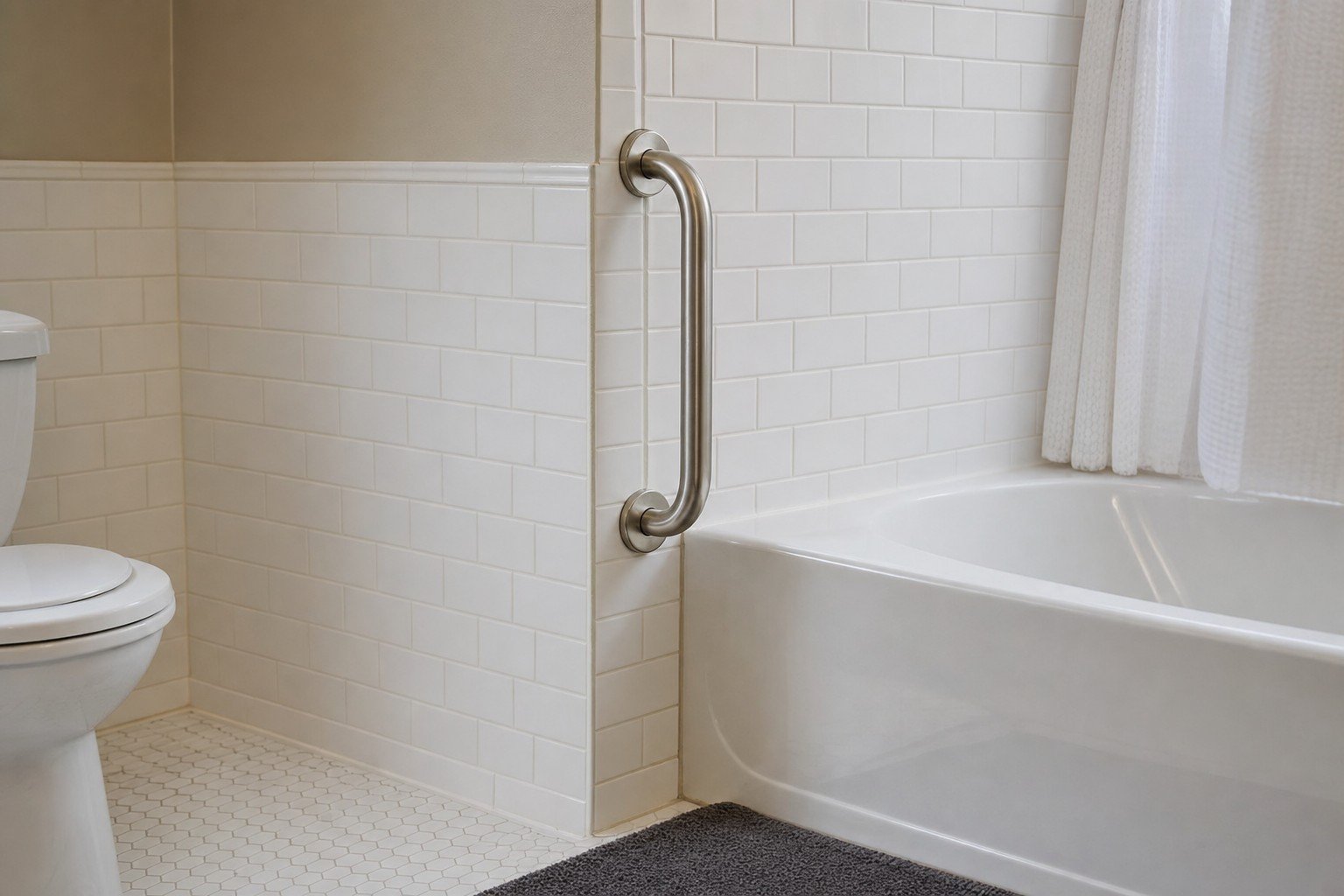
The bathroom deserves its own conversation.
If you have read about how to prevent falls at home and wondered where to start, the bathroom is the honest answer. Water, smooth surfaces, awkward positions and the effort of getting in and out of a bath combine in one small room. Nowhere else in the house quite matches that combination.
You can change almost all of that without a major renovation. The fixes that make the biggest difference are well understood, and most of them are affordable.
Here is a room-by-room walk through what actually helps.
Getting in and out of the bath
The moment of stepping over the bath rim is where many people feel most uncertain. You are balancing on one leg, possibly wet, often on a slippery surface. That is not a design flaw you have to live with.
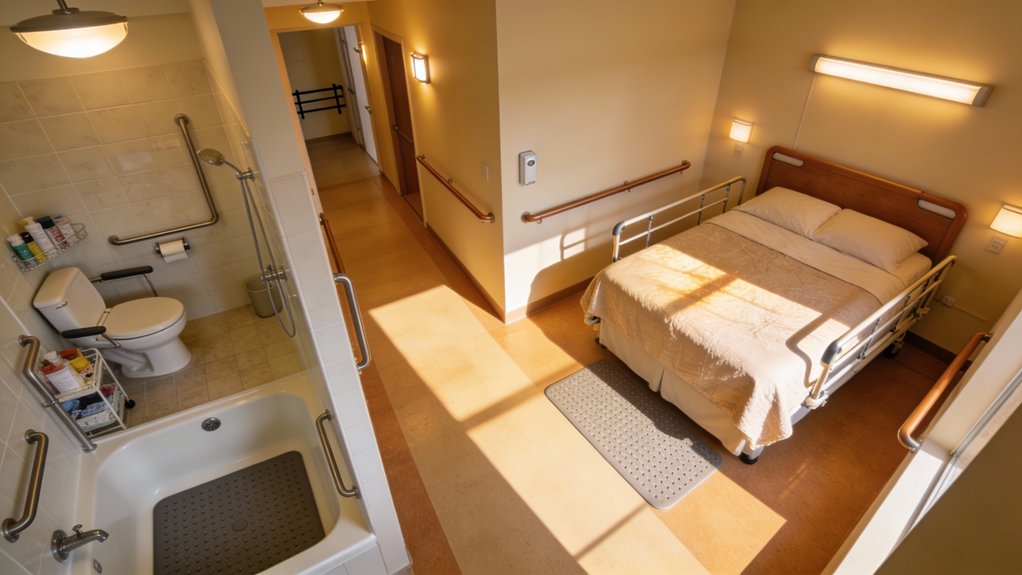
The most effective thing you can add is a grab bar fixed into the wall beside the bath, at the right height for your hand as you swing your leg over.
This is different from a towel rail. A towel rail is not rated for your body weight, and it can pull free from the wall at exactly the wrong moment. A proper grab bar is rated for it.
A second bar on the back wall, positioned for when you are sitting and want to lift yourself up, makes the whole process steady.
That is the difference between a careful daily ritual and a moment of real risk.
If a bath feels like more work than it is worth, that is a reasonable thing to decide.
A walk-in shower removes the step-over entirely. For many people it is the single change that makes the bathroom relaxed to use again.
Slippery floors and non-slip mats
A wet floor is the most straightforward hazard in any bathroom, and the fix is equally straightforward.
A non-slip mat inside the bath or shower tray catches the moment when you are most exposed. A separate mat on the floor beside the bath catches the moment when you step out.
Both mats need to stay put. Choose ones with rubber backing and check occasionally that suction cups have not worked loose.
Some bathroom floors are glossy tile, which becomes almost frictionless when wet.
If yours is, a simple mat on the walking route to the toilet and the sink adds grip without any permanent change to the room.
Grab bars: fixed into the wall, not stuck on
The distinction matters enough to repeat. Suction-cup grab bars are widely sold, but they are not reliable when your full weight is on them. For anything load-bearing, a proper grab bar should be drilled and fixed into a wall stud or with appropriate fixings.
The positions that help most:
- Beside the bath, at standing height, for stepping in and out
- Inside the shower, on the wall you reach for balance
- Beside the toilet, on the side you favour when you stand up
A handyman or occupational therapist can fit all three in a morning. Your GP can refer you to an occupational therapist if you are not sure what you need, or if you rent and want professional advice before making changes.
You can also compare bathroom grab bars on Amazon to get a sense of what is available before you decide.
Walk-in showers and shower stools
If you are thinking about a bigger change to your bathroom, a walk-in shower with a low or zero threshold is one of the most practical updates you can make.
There is no step to manage, the floor is generally designed with drainage and grip in mind, and the whole space is easier to use.
You do not have to install one to benefit from a stool, though. A sturdy shower stool lets you sit down while you wash, which takes standing balance out of the equation entirely. Many people find this makes showering more comfortable as well as safer, especially first thing in the morning when legs can feel stiff.
The stool should have non-slip feet and be steady before you put weight on it.
Check it each time.
Raised toilet seats
Getting up from a low toilet can be harder than it looks, particularly if your knees or hips bother you, or if you are recovering from an illness.
A raised toilet seat fits over your existing toilet and brings the seat height up by several inches. Paired with a grab bar on the wall beside the toilet, it can remove what might otherwise be a daily effort.
These are widely available and fit without tools.
If you are unsure whether one would help, an occupational therapist can advise.
Lighting
A bathroom trip in the middle of the night starts before you get to the bathroom.
The walk from bed, through the hall, and into the room all happen when your eyes have not adjusted and your balance is at its lowest.
Motion-sensing night-lights in the hall and just inside the bathroom door mean you never have to fumble for a switch. A lit path removes one of the quieter risks in the home, and a plug-in light costs very little.
Inside the bathroom itself, make sure the main light switch is easy to reach from the door.
If it is in an awkward position, it is worth asking an electrician to move it. A small job, but worth doing.
Keeping a phone or pull-cord within reach
This one is less about prevention and more about what happens if something does go wrong.
If you have a fall in the bathroom and cannot get up, being able to call for help quickly matters a great deal.
A pull-cord alarm, if your home has one, should hang low enough to reach from the floor. If it does not, that is an easy adjustment.
A small pouch worn around the wrist or neck that holds your mobile phone means you are never out of reach of help, even in a room where phones usually stay outside.
You can also let someone know your usual routine, so that if they do not hear from you by a certain time, they know to check in.
This is not about giving up independence. It is a small, quiet safety net that most people forget to put in place.
Linking the bathroom to the rest of the house
The bathroom does not exist in isolation. For a fuller picture of how to make your whole home safer, the guide to creating a safe home environment for aging in place covers the whole house, room by room.
The bathroom changes in this guide are some of the most effective you can make. Most of them cost little and none require structural work. Several take less than an afternoon to put in place.
Start with one thing today. A non-slip mat, a grab bar, a night-light. The bathroom becomes a safer place one small change at a time.
This article is general information, not medical advice. If you have concerns about your safety or mobility in the bathroom, speak to your GP or ask for a referral to an occupational therapist.