Tag: home workouts

  • How to Improve Balance After 60

    How to Improve Balance After 60

    As you move into your 60s, you’ve probably noticed that balance isn’t quite what it used to be. Your muscles weaken, your inner ear changes, and suddenly that walk across a room feels riskier than before.

    The good news? You can turn this around with the right approach.

    A few targeted exercises, done consistently at home, can rebuild your stability and confidence in just weeks.

    Why Balance Declines After 60
    aging affects balance stability

    As you get older, your body’s balance system doesn’t work quite like it used to. Your vestibular system, which controls balance, naturally weakens with age-related changes.

    Meanwhile, your muscles lose strength and flexibility, making stability harder to maintain.

    Vision changes, slower reaction times, and reduced proprioception, your body’s sense of position, all contribute to balance decline. Health conditions like type 2 diabetes and high blood pressure can worsen these issues.

    These factors combine to increase your fall risk considerably. Understanding what’s happening helps you take action and protect yourself through targeted balance training to prevent falls and regain your movement confidence.

    6 Essential Balance Exercises You Can Do at Home

    Now that you understand why your balance weakens, you can start fighting back with simple exercises you do at home.

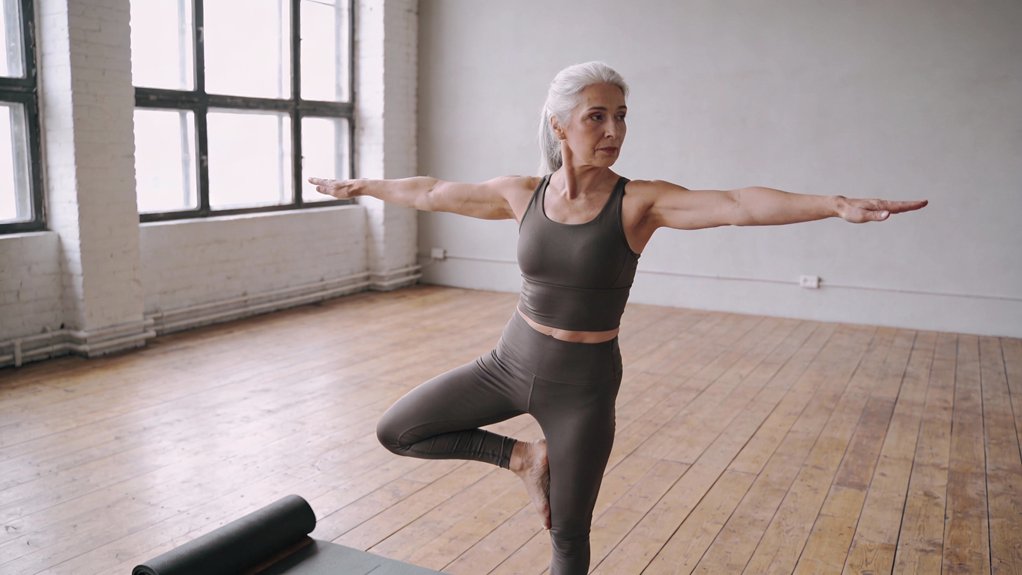
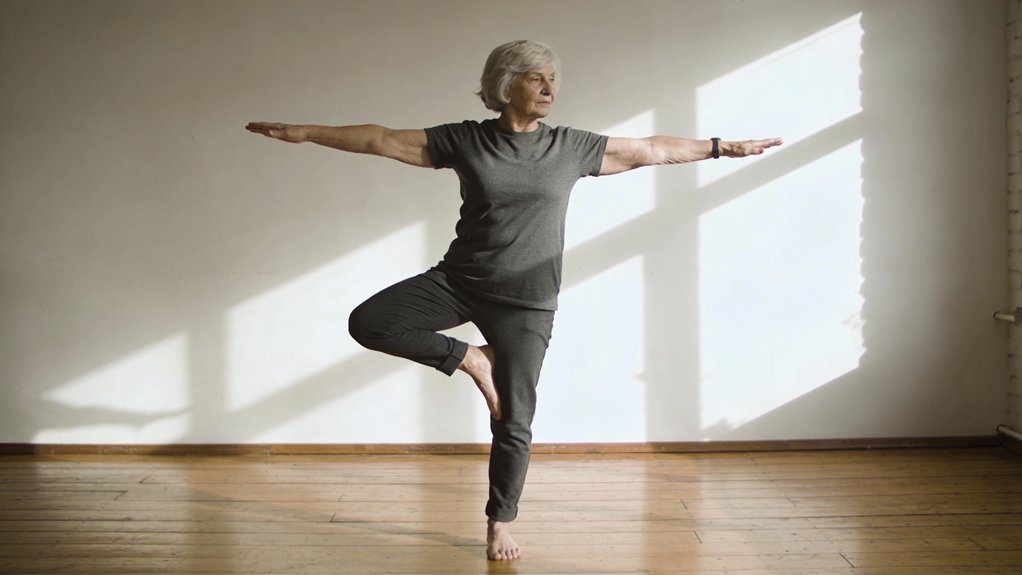
    Try the Single Leg Stand and Tree Pose to build stability and coordination.

    Perform 10 Sit to Stand exercises daily to strengthen your core safely.

    Practice Heel to Toe walks to sharpen your movement precision.

    Add Sideways Walking and Simple Grapevine movements to improve side-to-side balance.

    These exercises reduce fall risk and boost your independence. Incorporate seated exercises into your routine for additional strength gains without standing.

    Start slowly, stay consistent, and you’ll notice real improvements in how you move through your day.

    Set Up Safe Supports Before You Start

    Before you tackle any of these balance exercises, you’ve got to set up your space the right way.

    Creating a supportive environment is essential for exercise safety and injury prevention.

    Creating a supportive environment is essential for exercise safety and injury prevention.

    Position a sturdy chair, wall, or railing within arm’s reach for immediate support.

    Clear your workout area of rugs, loose furniture, and clutter that could trip you up.

    Work on flat, even surfaces only; uneven ground invites falls.

    Wear non-slip shoes with good grip.

    Consider using a cane or walker if you need extra stability as you build confidence.

    These smart preparations let you focus on improving your balance without worrying about accidents.

    Progress Your Balance Training Safely
    safe balance training progression

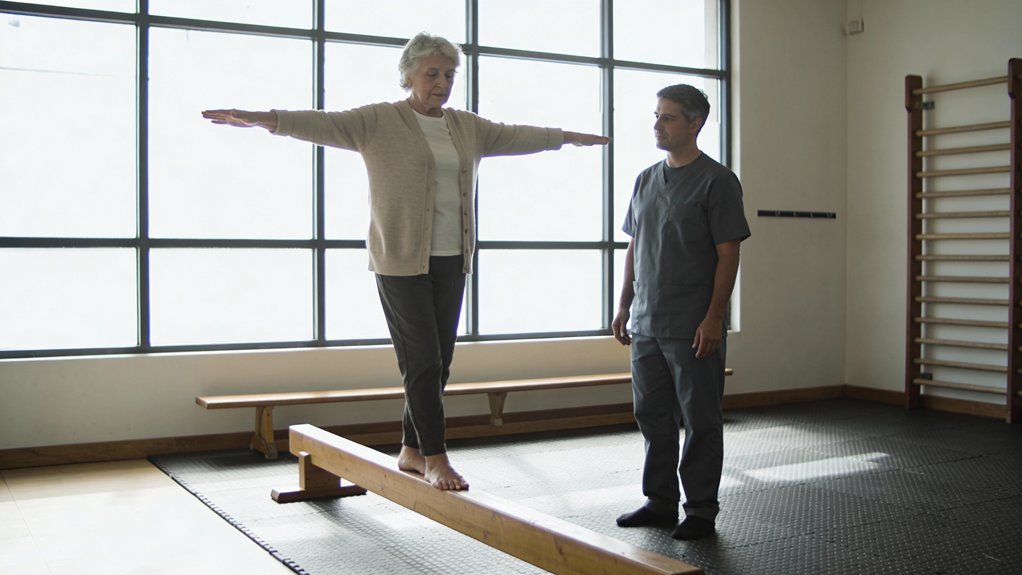
    Getting better at balance doesn’t mean jumping straight into challenging exercises. Start with a balance assessment of your current abilities.

    Then build your exercise progression gradually over weeks.

    Begin with supported moves like standing marches while holding a sturdy chair. Once you feel confident, try single-leg stands for short periods. Aim for at least 30 minutes of balance work weekly to see real improvements.

    Listen to your body carefully. If you experience pain or excessive fatigue, dial back the intensity. Rest when needed.

    This measured approach builds both strength and confidence safely.

    Build Balance Strength for Independence

    As you build confidence with basic balance moves, it’s time to strengthen the muscles that support your stability.

    Muscle strength directly improves your balance training effectiveness and independence in daily life.

    Strong muscles enhance your balance training results and boost your everyday independence.

    Focus on these three key exercises:

    1. Sit-to-stands: Rise from a chair without using your hands to build leg power.
    2. Lunges: Step forward and lower your body to strengthen your lower body muscles.
    3. Core work: Practice planks or standing marches to stabilize your center.

    Practice these movements three times weekly.

    Consistent strength training reduces fall risk and helps you move confidently through your home and community.
  • Simple Chair Exercises for Seniors at Home

    Simple Chair Exercises for Seniors at Home

    About 1 in 4 adults over 65 experience falls each year, a sobering reality that changes how you might think about staying fit at home.

    You don’t need a gym membership or fancy equipment to build real strength. Chair exercises offer you a safe, practical way to improve balance and flexibility.

    But here’s what most people get wrong about seated workouts.

    Why Chair Exercises Work for Seniors at Home

    chair exercises for seniors

    Since chair exercises offer stability that floor-based workouts can’t match, they’re particularly practical for seniors staying active at home.

    You’ll appreciate how chair exercise benefits include reduced fall risk while still building muscle strength and flexibility. Your balance improves through consistent practice, making daily tasks easier to manage.

    These senior fitness routines require no special equipment, so you can start immediately in your living room.

    Regular participation helps you manage chronic conditions like osteoporitis and heart disease.

    Regular chair exercise participation helps manage chronic conditions like osteoporosis and heart disease effectively.

    You’ll notice better mobility and stamina within weeks, enabling you to stay independent longer while performing everyday activities more confidently and comfortably. Practicing balance improvement techniques regularly can significantly enhance your stability and reduce the likelihood of falls in your home environment.

    Master the Core 6 Seated Exercises

    Now that you understand why chair exercises work so well, let’s look at the specific movements that’ll make the biggest difference.

    These six seated strength exercises target your major muscle groups safely.

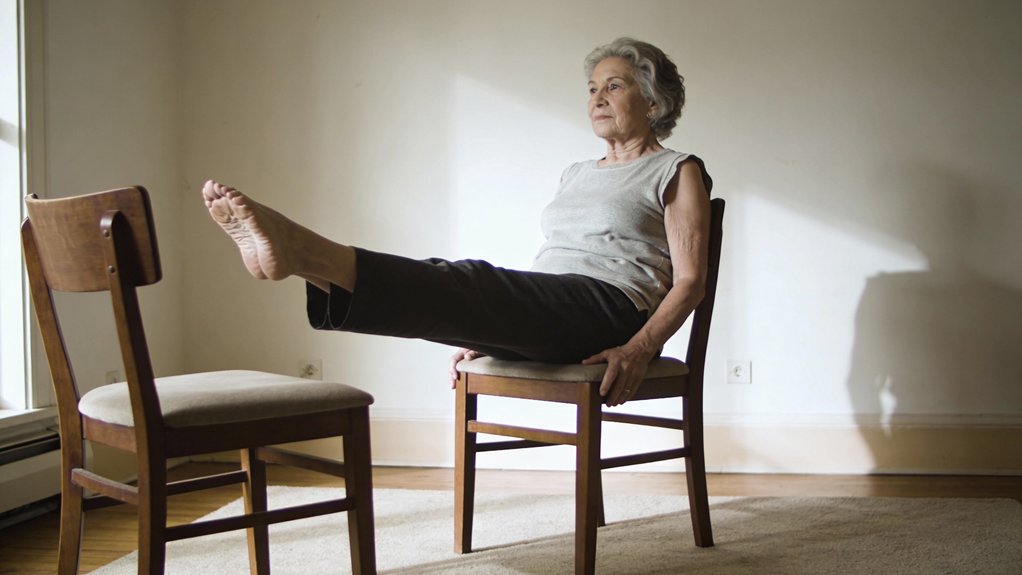
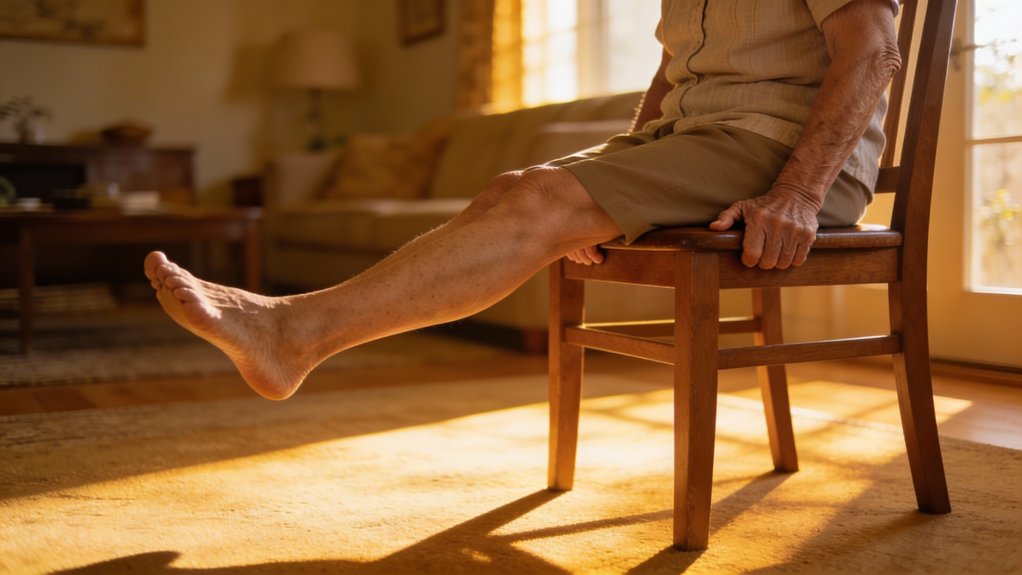
    Seated Leg Extensions strengthen your quadriceps by lifting one leg parallel to the floor.

    Pelvic Tilts engage your core for stability.

    Heel Raises and Toe Raises build lower leg strength essential for daily balance.

    Shoulder Blade Squeezes improve posture while Thigh Squeezes work your inner thighs.

    This flexibility focus means you’re building strength while maintaining mobility.

    Each movement delivers real results without requiring equipment or leaving your chair.

    Seated exercises for older adults are specifically designed to be performed safely from a chair, making them an ideal solution for seniors who want to improve their fitness without standing or leaving home.

    Breathing and Form Fundamentals

    You’ve got the movements down, but here’s where most people stumble: they skip the breathing and form basics that make exercises actually work.

    Breath control oxygenates your muscles and boosts stamina. Exhale during exertion; inhale during rest phases.

    This rhythm prevents strain and keeps you steady.

    Posture alignment matters equally. Sit upright with shoulders back.

    This positioning reduces injury risk and improves effectiveness. Engage your core by tightening abdominal muscles; this stabilizes your body, especially essential if balance concerns you.

    Move slowly and deliberately. Controlled movements build muscle memory and strengthen both strength and flexibility safely.

    Practice these fundamentals consistently, and exercises become natural and comfortable.

    6 Form Mistakes That Undermine Results

    form mistakes undermine workouts

    6 Form Mistakes That Undermine Results

    Even with solid breathing and posture fundamentals down, many people still sabotage their results through small but costly form mistakes.

    Posture pitfalls like slouching reduce muscle engagement and invite injury. You’ll maximize your workout by sitting upright throughout each exercise.

    Movement control matters equally—quick, jerky motions bypass proper muscle challenge. Instead, perform each repetition slowly and deliberately.

    Neglecting core engagement during seated work compromises your stability and balance, limiting overall benefits.

    Core engagement during seated exercises is essential—neglecting it compromises stability, balance, and overall workout effectiveness.

    Skipping warm-ups before exercising risks muscle strains and reduced flexibility. Invest five minutes warming up first.

    These small adjustments transform your chair workouts from merely going through motions into genuinely effective strength-building sessions.

    Building Your Weekly Routine

    Once you’ve mastered proper form, it’s time to structure your workouts strategically. Aim for two muscle-strengthening sessions weekly with one rest day between them. This exercise frequency allows your body proper recovery time.

    Each session should last fifteen to thirty minutes, targeting major muscle groups like legs, arms, and shoulders. Perform one set of each exercise with thirty to sixty seconds of rest between movements.

    Routine consistency matters more than intensity. As your strength improves, gradually increase repetitions or add rounds. Track your progress carefully, adjusting based on how you feel and what works best for your body.

    Progressing Your Chair Exercises Safely

    As your strength builds from consistent practice, it’s time to challenge your body with gradual progression.

    Start by adding one or two extra repetitions to familiar exercises before increasing sets. This exercise progression prevents injury while building endurance safely.

    Introduce light resistance like water bottles or small weights during seated biceps curls and shoulder raises.

    Proper form matters most: reduce reps if technique suffers.

    Rest at least one day between strength sessions for muscle recovery.

    Check with your healthcare provider before intensity adjustment to match your specific health needs and capabilities.