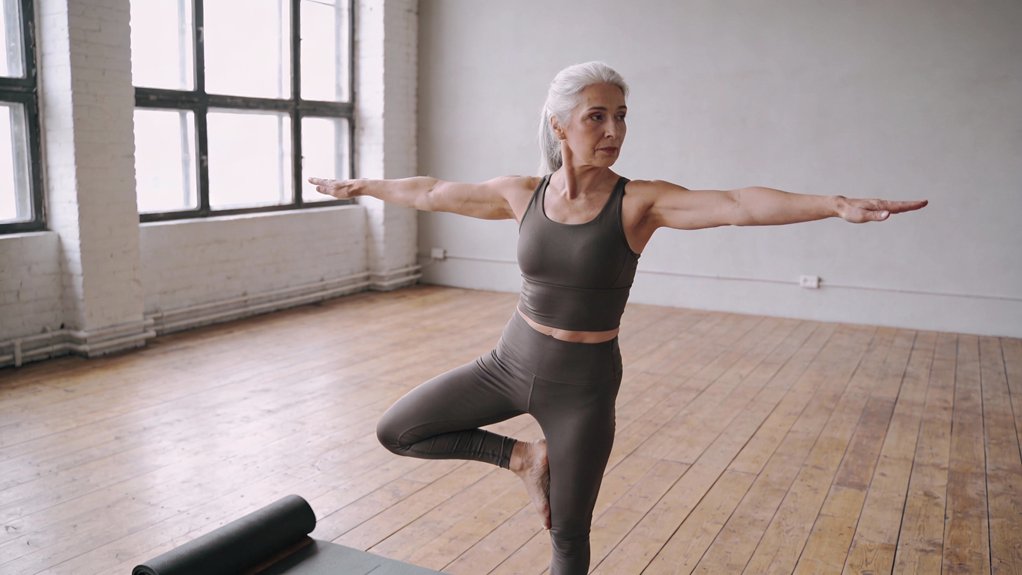
As you move into your 60s, you’ve probably noticed that balance isn’t quite what it used to be. Your muscles weaken, your inner ear changes, and suddenly that walk across a room feels riskier than before.
The good news? You can turn this around with the right approach.
A few targeted exercises, done consistently at home, can rebuild your stability and confidence in just weeks.
Why Balance Declines After 60
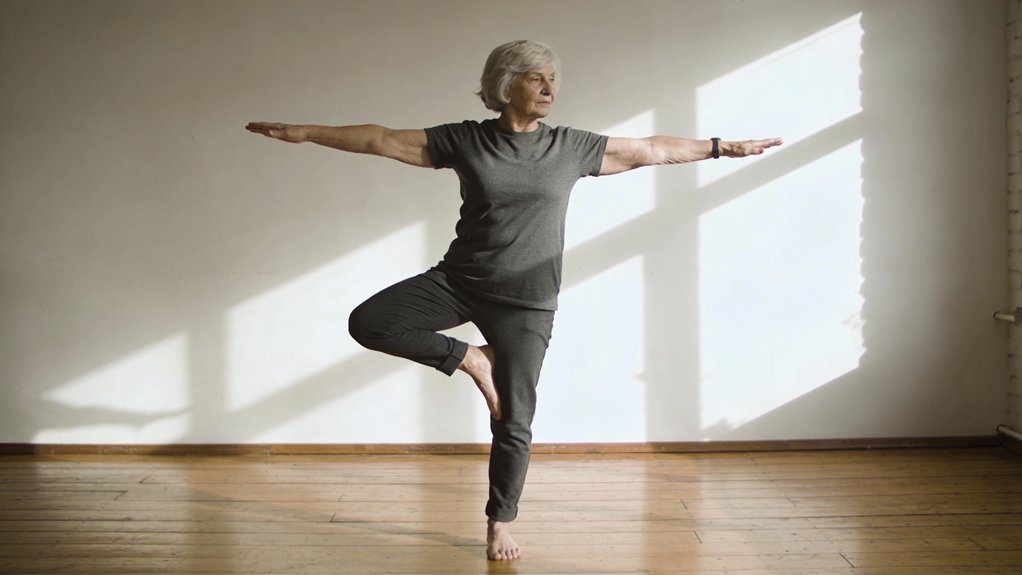
As you get older, your body’s balance system doesn’t work quite like it used to. Your vestibular system, which controls balance, naturally weakens with age-related changes.
Meanwhile, your muscles lose strength and flexibility, making stability harder to maintain.
Vision changes, slower reaction times, and reduced proprioception, your body’s sense of position, all contribute to balance decline. Health conditions like type 2 diabetes and high blood pressure can worsen these issues.
These factors combine to increase your fall risk considerably. Understanding what’s happening helps you take action and protect yourself through targeted balance training to prevent falls and regain your movement confidence.
6 Essential Balance Exercises You Can Do at Home
Now that you understand why your balance weakens, you can start fighting back with simple exercises you do at home.
Try the Single Leg Stand and Tree Pose to build stability and coordination.
Perform 10 Sit to Stand exercises daily to strengthen your core safely.
Practice Heel to Toe walks to sharpen your movement precision.
Add Sideways Walking and Simple Grapevine movements to improve side-to-side balance.
These exercises reduce fall risk and boost your independence. Incorporate seated exercises into your routine for additional strength gains without standing.
Start slowly, stay consistent, and you’ll notice real improvements in how you move through your day.
Set Up Safe Supports Before You Start
Before you tackle any of these balance exercises, you’ve got to set up your space the right way.
Creating a supportive environment is essential for exercise safety and injury prevention.
Creating a supportive environment is essential for exercise safety and injury prevention.
Position a sturdy chair, wall, or railing within arm’s reach for immediate support.
Clear your workout area of rugs, loose furniture, and clutter that could trip you up.
Work on flat, even surfaces only; uneven ground invites falls.
Wear non-slip shoes with good grip.
Consider using a cane or walker if you need extra stability as you build confidence.
These smart preparations let you focus on improving your balance without worrying about accidents.
Progress Your Balance Training Safely
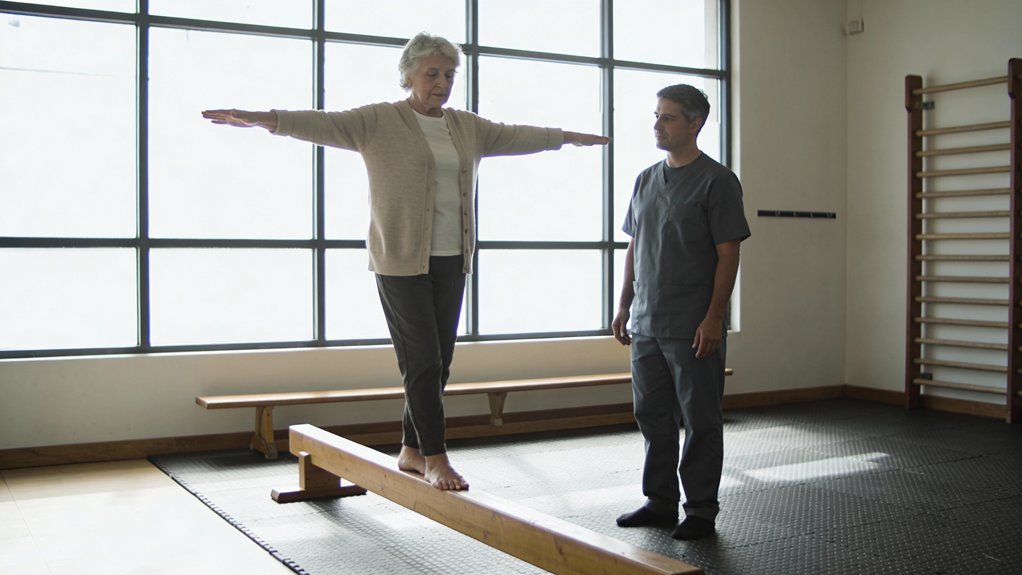
Getting better at balance doesn’t mean jumping straight into challenging exercises. Start with a balance assessment of your current abilities.
Then build your exercise progression gradually over weeks.
Begin with supported moves like standing marches while holding a sturdy chair. Once you feel confident, try single-leg stands for short periods. Aim for at least 30 minutes of balance work weekly to see real improvements.
Listen to your body carefully. If you experience pain or excessive fatigue, dial back the intensity. Rest when needed.
This measured approach builds both strength and confidence safely.
Build Balance Strength for Independence
As you build confidence with basic balance moves, it’s time to strengthen the muscles that support your stability.
Muscle strength directly improves your balance training effectiveness and independence in daily life.
Strong muscles enhance your balance training results and boost your everyday independence.
Focus on these three key exercises:
- Sit-to-stands: Rise from a chair without using your hands to build leg power.
- Lunges: Step forward and lower your body to strengthen your lower body muscles.
- Core work: Practice planks or standing marches to stabilize your center.
Practice these movements three times weekly.
Consistent strength training reduces fall risk and helps you move confidently through your home and community.