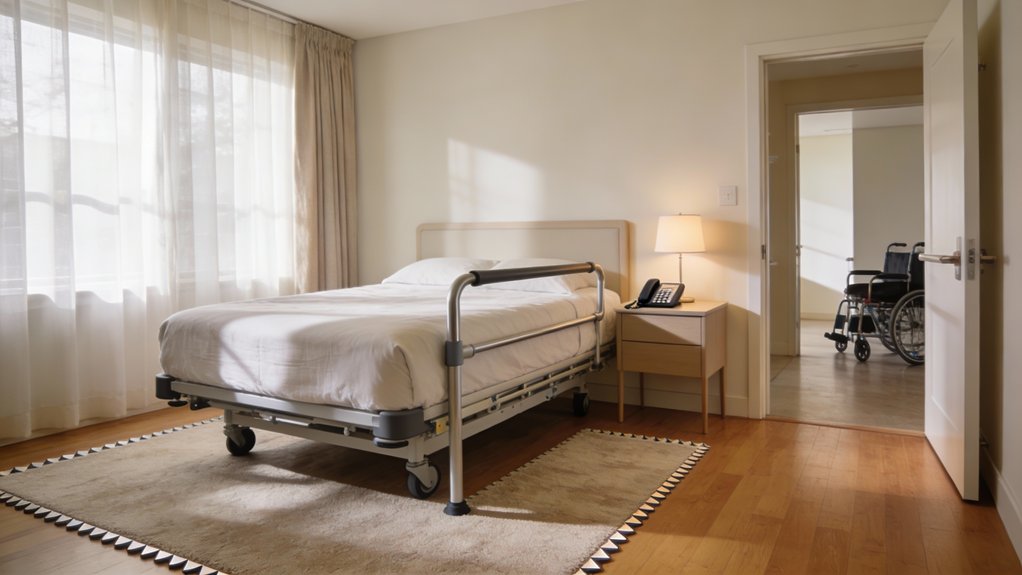
You’ve probably noticed that your home wasn’t designed with aging in mind. Stairs feel steeper. Bathrooms get slippery.
Hallways turn into obstacle courses after you’ve accumulated years of stuff. The good news? You don’t need to move.
Instead, you can transform your space into a safer place where you’ll maintain your independence, but first, you need to know where the real dangers are hiding.
Conduct a Room-by-Room Fall Risk Assessment
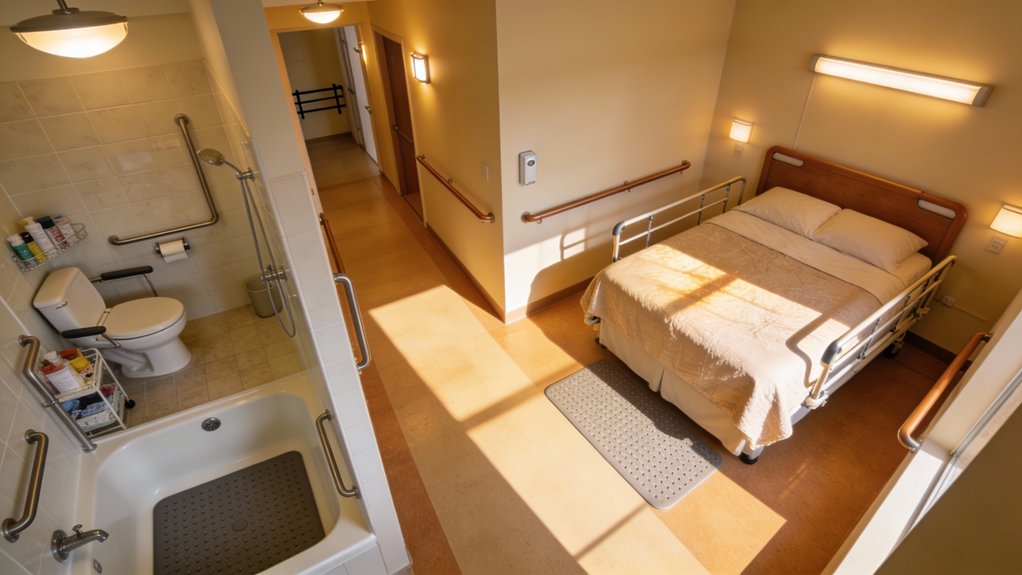
Since falls are the leading cause of injury for older adults, you’ll want to walk through your home methodically and look for hazards that might trip someone up.
Start your safety checklist in each room, noting clutter, loose rugs, and dim lighting.
Pay special attention to your bedroom, bathroom, and kitchen, high-risk areas where accidents happen frequently. Document your room layout and identify specific problem spots.
Look for obstacles blocking pathways. Check closet organization. Notice uneven flooring. Record adequate lighting levels.
Consider installing grab bars and handrails in bathrooms and along stairways to provide stability and prevent falls.
This thorough assessment helps you prioritize which safety improvements matter most for your loved ones’ protection and independence.
Identify Common Fall Hazards in Senior Homes
Your room-by-room assessment gives you a solid foundation. Now you’ll spot the actual hazards threatening safety.
Loose rugs and unsecured carpets cause tripping; use non-slip backing to secure them.
Secure loose rugs and unsecured carpets with non-slip backing to eliminate tripping hazards throughout your home.
Dark staircases and hallways create serious risks; install bright lighting throughout these areas.
Clutter on floors and walkways blocks mobility aids and movement paths, so clear these spaces regularly.
Bathrooms particularly need attention: only 18% of homes have grab bars, which prevent falls during bathing and toileting.
Kitchen cabinets at awkward heights challenge reaching safely.
These common hazards respond well to targeted fall prevention efforts you can tackle systematically. Incorporating balance improvement techniques alongside environmental modifications creates a comprehensive approach to reducing fall risk and building movement confidence.
Remove Clutter and Secure Loose Rugs
When you walk through your home, you’re probably stepping over things without thinking twice, but seniors moving more slowly can’t afford that luxury.
Start your decluttering strategies by clearing hallways and main pathways completely. Remove items sitting on floors that create tripping hazards.
Next, tackle rug safety by securing loose rugs with non-slip pads underneath. Consider removing rugs entirely if they’re problematic.
Keep frequently used items within arm’s reach to prevent dangerous stretching.
A systematic approach transforms your space into one that promotes independence and confidence. Regular maintenance guarantees walkways stay open and accessible, directly supporting safer aging in place.
Add Bright, Layered Lighting Throughout
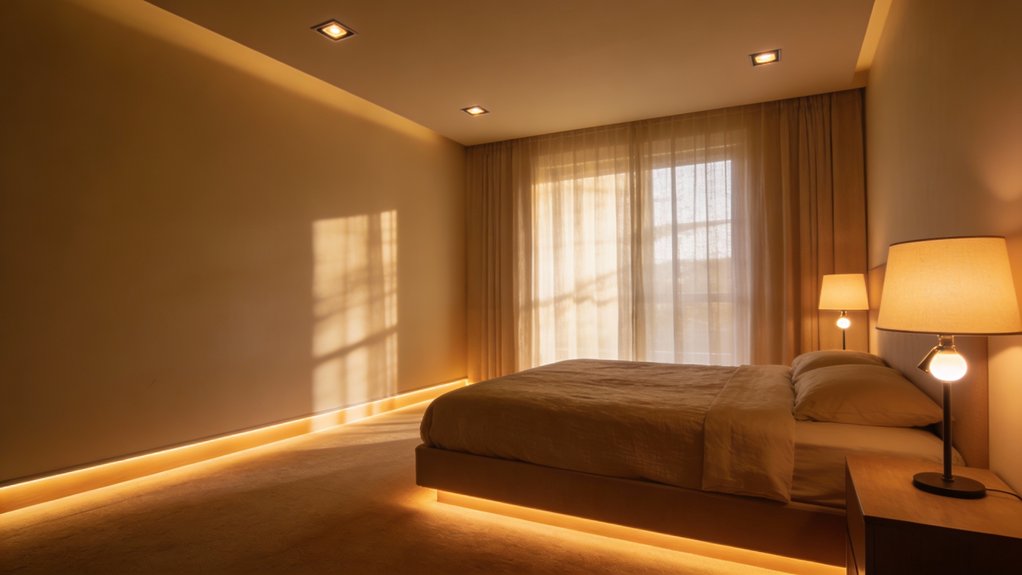
Poor lighting’s one of the biggest culprits behind senior falls, so it’s worth addressing head-on.
You’ll want to install brighter bulbs throughout your home, especially in high-traffic areas like hallways and staircases.
Here’s what makes a real difference:
- Layer your lighting by combining ambient lighting with task and accent options for flexibility
- Add motion sensors in entryways and bathrooms for automatic illumination when someone approaches
- Place nightlights in bedrooms and bathrooms for safe nighttime movement without harsh overhead lights
Regularly replacing burnt-out bulbs keeps visibility consistent.
These simple changes greatly reduce tripping and falling risks, particularly for those with vision impairments.
Install Grab Bars in Bathrooms and Stairways
Grab bars are one of the most effective safety upgrades you can install for aging in place.
You’ll want to focus on grab bar placement in bathrooms near toilets, inside shower stalls, and along stairways.
For installation tips, mount bars at 33 to 36 inches high at angles that feel natural when gripping.
Choose bars supporting at least 250 pounds to accommodate various users safely.
Proper installation reduces fall injuries by roughly 50 percent.
These sturdy supports give you or your loved ones confidence moving through potentially hazardous areas.
They’re practical investments in dignity and independence.
Design a Safer, More Accessible Bathroom
Design a Safer, More Accessible Bathroom
Since bathrooms pose the greatest fall risks for older adults, it’s worth taking time to redesign this space thoughtfully.
You can implement several bathroom accessibility and safety features to protect your loved ones:
- Install grab bars near toilets and inside showers or tubs for stable support
- Add anti-slip mats, adjustable shower seats, and raised toilet seats to reduce slipping hazards
- Choose walk-in tubs or low-threshold showers to eliminate stepping obstacles
You’ll also want to place nightlights strategically throughout the bathroom. Better visibility during nighttime visits prevents accidents considerably.
These practical modifications transform bathrooms into safer spaces where older adults maintain independence while bathing and using facilities confidently.
Organize Your Kitchen for Easy, Safe Access
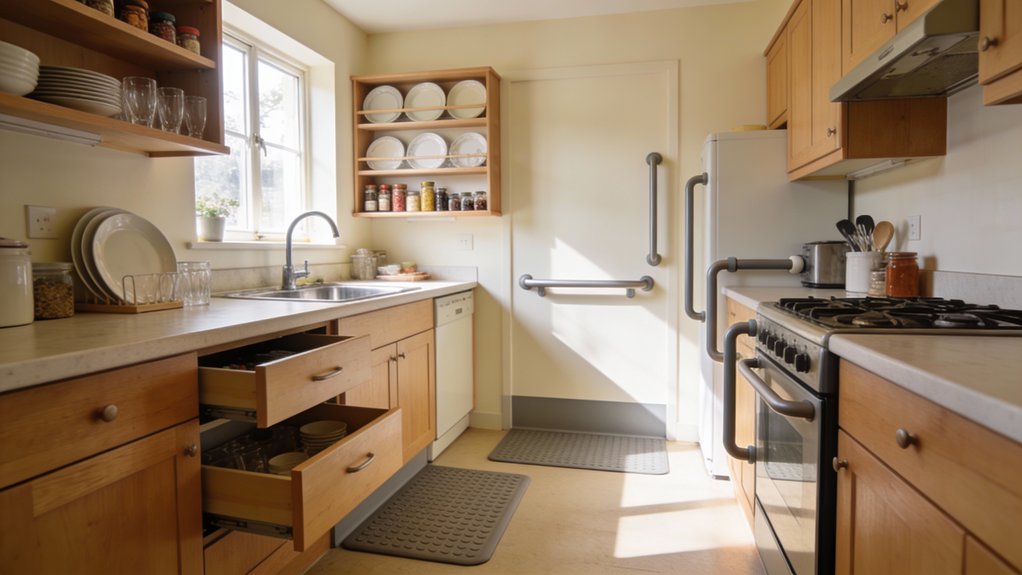
The kitchen’s layout can make or break safety for aging adults. You’ll want to arrange frequently used items at waist level, eliminating the need for stools or ladders that increase fall risk.
Install pull-out shelves and lazy Susans to enhance accessibility without excessive bending or stretching. Your safe storage strategy should keep sharp objects and heavy items in lower cabinets.
Add touchless faucets to prevent slips when hands are wet.
Finally, install under-cabinet lighting and motion-sensor fixtures throughout.
This kitchen layout creates an environment where you can prepare meals independently and confidently.
Replace Doorknobs and Add Accessible Entryways
Your doorknobs and entryways are often the first obstacles you’ll encounter when moving through your home.
Making strategic modifications here creates meaningful independence for aging loved ones.
Consider these practical upgrades:
- Install lever handles instead of traditional doorknobs, requiring considerably less grip strength and reducing strain on arthritic hands.
- Add entryway ramps to eliminate steps, allowing wheelchairs and walkers smooth access without dangerous changes.
- Widen doorways to 36 inches minimum, ensuring mobility aids fit comfortably through passages.
Well-lit, clutter-free entryways prevent accidents and improve visibility.
The CDC confirms most falls happen at home, making these modifications essential safety investments that support aging in place successfully.
Smart Home Technology for Safer Independent Living
While physical modifications like ramps and lever handles create safer pathways through your home, technology can work alongside these changes to protect your loved ones even further.
Smart home integration offers practical solutions for everyday safety.
Voice assistant benefits include hands-free control of lighting, temperature, and appliances, eliminating trips through dark areas. Motion-activated lights automatically illuminate hallways and bathrooms at night.
Medical alert systems with fall detection contact emergency services instantly when accidents happen.
Smart smoke and carbon monoxide detectors send immediate smartphone alerts. Telehealth services enable virtual doctor visits, keeping seniors connected to care without leaving home.
Prioritize Your Modifications and Get Professional Help
Since safety concerns aren’t all equal, you’ll want to tackle the biggest risks first. Start by conducting thorough safety assessments of your home to identify hazards that pose immediate danger.
Prioritize the biggest safety risks first by conducting thorough home assessments to identify immediate hazards.
Focus your efforts here:
- Install grab bars in bathrooms and along stairways to prevent falls
- Improve lighting throughout hallways, entryways, and bedside areas
- Remove tripping hazards like loose rugs and clutter from walkways
Hiring professional contractors guarantees modifications meet safety standards and function properly. They’ll assess doorway widths, recommend appropriate flooring, and install stairlifts correctly.
Collaborating with aging-in-place experts gives you tailored solutions that support independence while protecting health.
Leave a Reply